
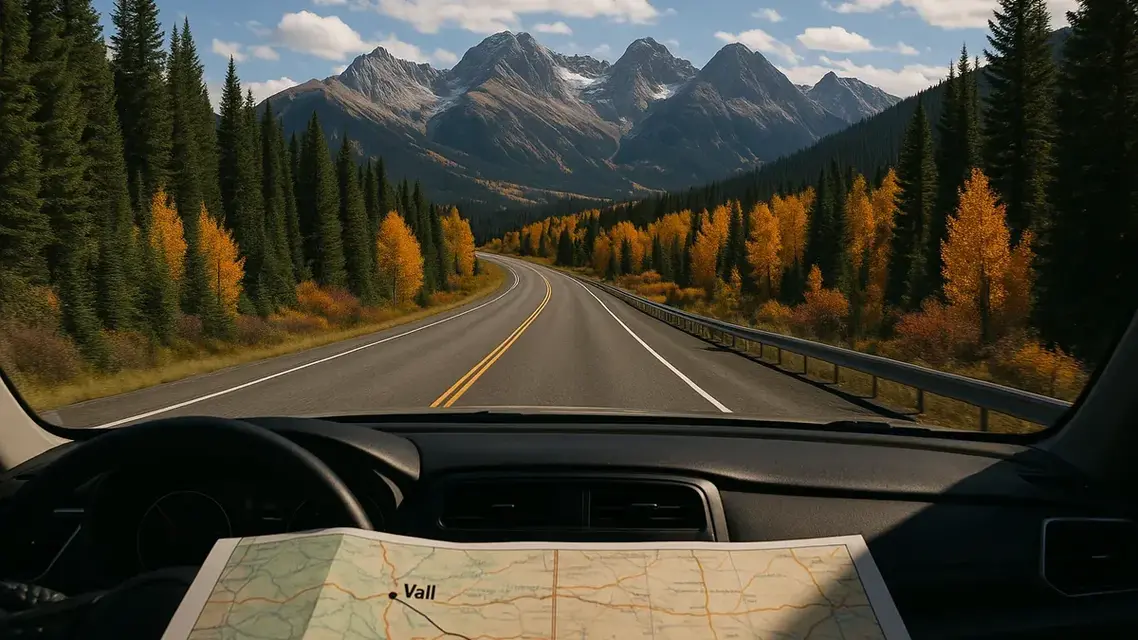
The drive from Vail to Albuquerque runs south through Leadville and the San Luis Valley into northern New Mexico. The stops worth planning around are Leadville, Great Sand Dunes National Park, San Luis, Taos Pueblo, Ghost Ranch and Santa Fe, listed here in the order a southbound driver meets them. Hours, fees and closures change, so confirm each stop before you commit a day to it.
The stops in order
| Stop | State | Why it earns a stop | Good to know |
|---|---|---|---|
| Leadville | Colorado | Mining history at about 10,200 feet | National Mining Hall of Fame and Museum |
| Great Sand Dunes National Park | Colorado | The tallest dunes in North America | Sand can reach 150 degrees F in summer; no reservation needed |
| San Luis | Colorado | Colorado's oldest continuously occupied town | Bronze Stations of the Cross shrine on a mesa above town |
| Taos Pueblo | New Mexico | A UNESCO World Heritage Site with homes over 1,000 years old | Open 9 a.m. to 4 p.m.; winter hours can change |
| Ghost Ranch | New Mexico | O'Keeffe landscape, Triassic fossil museum and hiking | 40 miles beyond Española on U.S. 84 |
| Santa Fe | New Mexico | Georgia O'Keeffe Museum | Galleries open daily 10 a.m. to 5 p.m. |
Leadville: mining history at 10,200 feet
The Colorado Department of Transportation calls Leadville, at 10,200 feet, the highest incorporated community in the United States. It sits on the Top of the Rockies Scenic Byway, which also passes through Red Cliff, Minturn, Twin Lakes and Copper Mountain. The National Mining Hall of Fame and Museum is the anchor stop, with exhibits on gold and on the boom-and-bust story of Leadville's California Gulch mines. The museum is open 10 a.m. to 4 p.m. Tuesday through Sunday, with last entry at 3:15 p.m., and closed Mondays; the same site lists the Matchless Mine Historic Site. A gallery on early Leadville, part of Colorado's 150th anniversary of statehood, opens August 1, 2026.
Twin Lakes and the Independence Pass turn
Twin Lakes is also on the Top of the Rockies byway, and it is where a byway extension turns west over Independence Pass on State Highway 82 toward Aspen. CDOT says the pass starts at 9,200 feet and climbs to 12,095 feet at the summit. That road leads to Aspen rather than south to the San Luis Valley, so skip the turn on this trip. To plan that direction instead, see getting from Aspen to Vail.
Great Sand Dunes National Park
The National Park Service says the park has the tallest dunes in North America. The dune field covers 30 square miles, and an NPS photo caption puts the viewpoint on Star Dune at 750 feet. The park is open 24 hours a day, seven days a week, year round, and there are no timed entries or reservations to visit. The park's address is 11999 State Highway 150.
In summer, the sand surface can reach 150 degrees Fahrenheit on sunny afternoons while daytime air highs average 75 to 80, and the NPS recommends exploring the dunes in the early morning or evening. Winters are cold, with average highs in the teens to 30s Fahrenheit. Specially designed sand sleds are available to rent for the dry sand; cardboard, snow sleds and saucers do not slide on it. Alamosa's tourism board describes the city as the gateway to the park and lists hotels, motels and campgrounds there.
San Luis: Colorado's oldest continuously occupied town
The Colorado Encyclopedia says Hispanos from the Taos Valley founded San Luis in April 1851, making it the oldest continuously occupied town in Colorado. Its People's Ditch, hand-dug beginning in April 1852, held the first official water right in Colorado, dated April 10, 1852. The town's best-known visitor stop is a shrine on a mesa overlooking town: the Encyclopedia describes fifteen bronze statues by local sculptor Huberto Maestas placed along a trail to the Capilla de Todos Los Santos, an adobe chapel, and says the shrine draws visitors and remains a holy site for many locals. San Luis is also listed on CDOT's Los Caminos Antiguos byway, along with the Great Sand Dunes and Alamosa.
Taos Pueblo and the Rio Grande Gorge
Taos Pueblo has been a National Historic Landmark since 1960 and a UNESCO World Heritage Site since 1992, and its multi-story adobe homes date back over a thousand years. Visiting hours are 9 a.m. to 4 p.m. every day, with winter hours subject to change and an events calendar that lists schedule changes. The Pueblo asks visitors not to photograph tribal members without permission, allows no photography in San Geronimo Chapel, and requires professional, commercial and artist visitors to apply for approval in advance. The Bureau of Land Management describes the Rio Grande del Norte National Monument, where the Rio Grande has cut a gorge up to 800 feet deep, in the northern Rio Grande Valley.
Ghost Ranch: a detour from Española
Ghost Ranch's landscape, made famous by Georgia O'Keeffe, covers 21,000 acres. It is on U.S. 84, 65 miles northwest of Santa Fe and forty miles beyond Española, so the detour is roughly an 80-mile round trip from Española. The ranch hosts the Ruth Hall Museum of Paleontology, open Tuesday to Saturday, 9 a.m. to 5 p.m., closed noon to 1 p.m., and Sunday from 1 p.m. to 5 p.m., closed Mondays. A day pass, listed at $10 for adults over 18, covers both of the ranch's museums and its hiking trails. The Coelophysis Quarry, a National Natural Landmark, can be hiked to on the Kitchen Mesa Trail, with a trail map from the Welcome Center. The Georgia O'Keeffe Museum's Abiquiú Welcome Center is open Tuesday to Sunday from 8 a.m. to 4 p.m.
Santa Fe and the last leg
The Georgia O'Keeffe Museum's Santa Fe galleries are open daily from 10 a.m. to 5 p.m. Santa Fe makes a natural overnight stop if you want to split the trip. Because the drive runs from high alpine passes to desert, see what to pack for Vail in each season.
The first part of the route is high country, so check Colorado road conditions on COtrip before you go. CDOT's traction and chain law rules are summarized in how to get to Vail.