
VailVacay may earn a commission if you book through links on this page, at no extra cost to you.
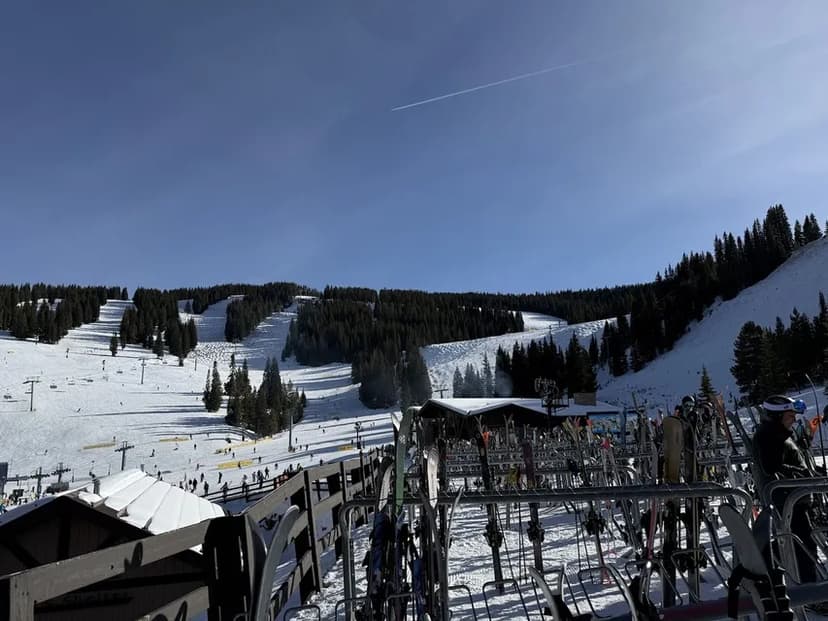
Photo above: 76 vortex via Google
Choose Vail if you want one enormous mountain with nearly 3,000 acres of bowl skiing, a base that sits higher and a pedestrian village built around the lifts. Choose Park City if the shortest trip from a major hub airport matters most, or if you want the largest ski area in the United States by acreage with a real 19th-century mining-town Main Street at its foot. Both are owned by Vail Resorts and both are unlimited on the full Epic Pass, so the choice is about the mountain, the town and the journey rather than the ticket.
Vail and Park City side by side
Figures are as each resort publishes them for the current season. Neither publishes a vertical drop, so the vertical below is summit minus base.
| Vail | Park City Mountain | |
|---|---|---|
| Owner and pass | Vail Resorts; unlimited on the Epic Pass | Vail Resorts; unlimited on the Epic Pass |
| Skiable terrain | 5,317 acres on one mountain | 7,300 acres across two mountains linked by gondola |
| Summit / base | 11,570 ft / 8,120 ft | 10,026 ft / 6,800 ft |
| Vertical (summit minus base) | 3,450 ft | 3,226 ft |
| Lifts / trails | 32 / 278 | 41 / 330+ |
| Average snowfall | 354 inches | 355 inches |
| Terrain split | 18% beginner, 29% intermediate, 53% advanced | 8% beginner, 42% intermediate, 50% advanced |
| 2026-27 peak walk-up day ticket | $374 | $369 |
| Nearest airports | Eagle County Regional (EGE), 35 miles; Denver (DEN), about 118 miles | Salt Lake City International (SLC), about a 35-minute drive |
| Town | Purpose-built resort town; skiing opened in 1962 | Silver-mining town incorporated in 1884; first ski resort opened in 1963 |
For the full set of Vail numbers, including lift capacity and longest runs, see our Vail stats page.
One big mountain or two linked ones
Park City's 7,300 acres make it, in the resort's words, the largest ski resort in the United States. That total comes from joining two areas. Vail Resorts opened the Quicksilver Gondola on December 18, 2015, linking the original Park City side with Canyons Village; the ride takes about eight and a half minutes. The resort now runs two main bases, Mountain Village and Canyons Village, and Visit Park City notes that the 2025-26 season added the Sun Rise Gondola from Canyons Village to Red Pine Lodge.
Vail is a single mountain, and the resort describes it as second only to Big Sky as the largest single-mountain ski resort in North America. Its signature is the bowl terrain on the back side: Vail lists nearly 3,000 acres of bowl skiing, plus the front-side groomers that run down to Vail Village and Lionshead. The longest run is Riva Ridge at 4 miles. If you are trying to decide whether the bowls suit your group, our guides on how hard Vail's Back Bowls are and Vail's 5,317 acres, bowl by bowl go into detail.
The published terrain splits look similar at the advanced end (53 percent at Vail, 50 percent at Park City), but Vail labels 18 percent of its terrain beginner against Park City's 8 percent, while Park City puts 42 percent in the intermediate column. Park City also lists seven terrain parks. Splits are each resort's own classification, so treat them as a rough guide rather than a like-for-like measure.
Snow and altitude
On paper the snowfall is a tie: Vail lists an average of 354 inches and Park City 355. Park City reports a record 636 inches in the 2022-23 season, and its mountain page leans on Utah's "Greatest Snow on Earth" slogan. Snowfall in any given week depends on the storm track, so check both resorts' reports close to your dates; our Vail snow report guide explains what Vail publishes, and when it snows in Vail covers the monthly pattern.
The bigger difference is elevation. Vail's base is 8,120 feet and its summit 11,570 feet; Park City's base is 6,800 feet and its summit 10,026 feet. You sleep about 1,300 feet lower in Park City, which some visitors who are sensitive to altitude will notice on the first night. Our guide to how high Vail is includes practical altitude tips.
Two very different towns
Park City grew from a silver, gold and lead boom that began in the 1860s. By 1889 about 5,000 people lived there, and the Silver King became one of the best-known mines in the world. Mining faded after the world wars, and skiing revived the town: the first resort, Treasure Mountains, opened in 1963. Today museums, preserved buildings and plaques around town, including along Historic Main Street, mark that past. The Town Lift is a smaller access point to the mountain, and the Town Runs bring skiers back down into the historic downtown. The town also hosted more than 40 percent of the events at the 2002 Winter Olympics.
Vail was built for skiing. The mountain opened on December 15, 1962, with one gondola, two chairlifts and $5 lift tickets, and the town grew up around the base. The result is a pair of pedestrian villages, Vail Village and Lionshead, each with its own lifts. The Vail map guide explains how the villages, neighborhoods and free bus fit together. Note that Beaver Creek and Avon, down the valley, are separate places with their own base areas.
Getting around is free in both. Park City runs a free bus network that reaches every neighborhood plus Park City Mountain and Deer Valley, and Vail's free in-town bus connects Vail Village and Lionshead. In warmer months Summit County adds Summit Bike Share, a fleet of more than 200 electric-assist bikes around Park City. In either town you can leave the car parked for most of a stay.
Search Park City hotels on Expedia
VailVacay earns a commission if you book through these links, at no extra cost to you.
Olympic history and ski heritage
Park City's skiing history predates its resort. Ski jumps were built on Ecker Hill, near Kimball Junction, in 1928, and the town was a host venue for the 2002 Winter Olympics: more than 40 percent of the events, including a third of all medal events, were held at Utah Olympic Park, Deer Valley and Park City Mountain. Visit Park City says the town is preparing to host again for the Utah 2034 Winter Games.
Vail's story runs through the Army. During World War II the 10th Mountain Division trained at Camp Hale, about 20 miles south of today's Vail, and two of its soldiers, Pete Seibert and Bob Parker, were among the people who later built the resort with Eagle County native Earl Eaton. The Colorado Snowsports Museum, founded in 1975 and based in Vail, tells that story; our guides to what Vail is known for and Vail's opening day in 1962 cover it in more depth.
Getting there
This is Park City's clearest advantage. Visit Park City puts Salt Lake City International Airport about 35 minutes away, with direct flights from major cities across the U.S. and abroad, and lists rideshare, shuttle and private-transfer options from the terminal.
Vail has two airport choices. Eagle County Regional (EGE) is 35 miles away, and Denver International (DEN) is about 118 miles east along Interstate 70. Discover Vail warns that weather closures on I-70 can last several hours or even overnight. Our guides to the closest airport to Vail and airport transfers to Vail compare shuttles, buses and rental cars.
Search flights to Denver (DEN) or Eagle County (EGE) on Kiwi.com
VailVacay earns a commission if you book through this link, at no extra cost to you.
Passes and lift tickets
Because both resorts belong to Vail Resorts, the full Epic Pass covers both with unlimited, unrestricted days. For 2026-27 the full Epic Pass launched at $1,089 for ages 31 and over, with a $869 price for ages 13 to 30. If you hold one, there is no ticket reason to choose one resort over the other.
Walk-up tickets are a different story. TownLift, citing 2026-27 pricing data, lists peak-day adult window prices of $374 at Vail and $369 at Park City Mountain. Both resorts price dynamically, so advance online prices are usually lower, and multi-day tickets bought ahead cost less per day. Our guides to Vail lift ticket prices and cheaper Vail lift tickets walk through the options.
One Park City quirk worth knowing: Deer Valley, next door, is a separate resort owned by Alterra and sold on the Ikon Pass, not the Epic Pass. TownLift lists its 2026-27 peak-day ticket at $349.
Sundance and the winter calendar
For four decades Park City's winter calendar was anchored by the Sundance Film Festival. That has changed. In March 2025 the Sundance Institute announced that Boulder, Colorado, would become the festival's home beginning in 2027, and the 2026 festival (January 22 to February 1, 2026, in Park City and Salt Lake City) was the final edition before the move. If you are booking for winter 2027, do not plan a Park City trip around Sundance.
For timing a Vail trip, our best time to visit Vail guide compares the ski season, summer and the shoulder months.
Who each one suits
Vail suits strong intermediates and experts who want open bowls and long days on one mountain, groups who like staying in a walkable village at the lifts, and anyone combining skiing with the rest of Colorado's resorts on an Epic Pass. Our comparisons of Beaver Creek and Vail, Vail and Breckenridge and Aspen and Vail cover the other nearby choices.
Park City suits travelers who value an easy airport transfer, families who want the town and the mountain within one free bus system, and anyone who likes a historic downtown for evenings. It also suits short trips: with a 35-minute transfer, a long weekend loses less time to travel.
If you have time for both
The two resorts are about 430 miles apart by road, roughly an eight-hour drive in good conditions, and the Colorado section uses I-70 over Vail Pass. In winter it is usually simpler to fly: book into Salt Lake City and out of Denver or Eagle, or the reverse, and ski both on one Epic Pass. Allow a travel day between them, and check road conditions on COTrip before any mountain drive. The two towns have other ties: the story of how Vail Resorts came to own Park City is told in how Vail Resorts got Park City, and Visit Park City counts Lindsey Vonn, long associated with Vail, as a part-time Park City resident (see where Lindsey Vonn lives today).