
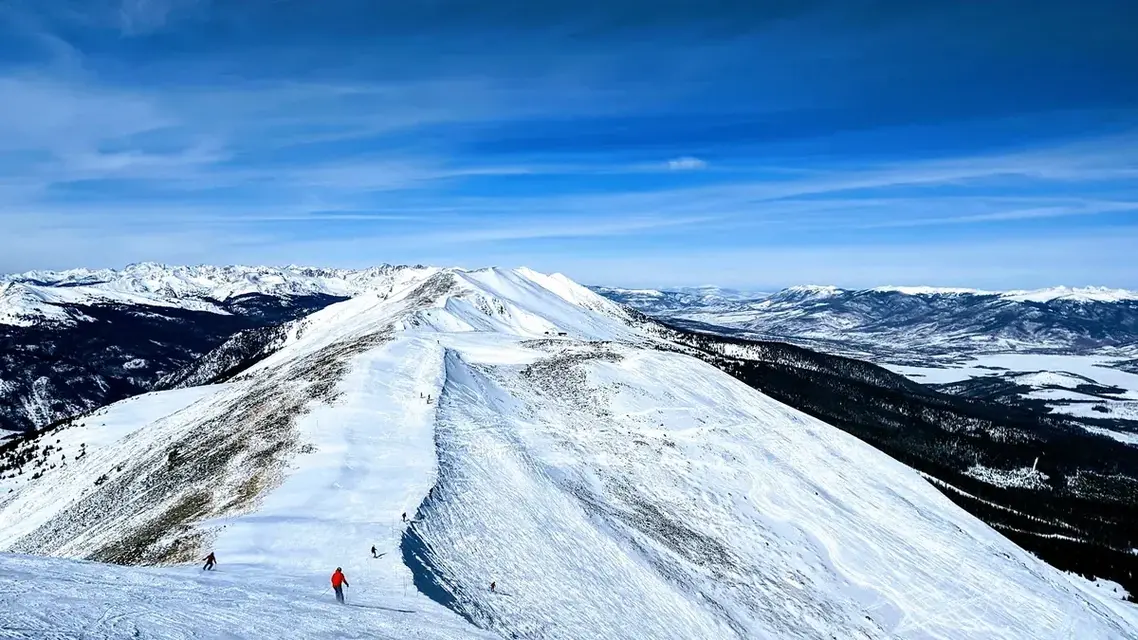
Vail Resorts acquired Breckenridge on January 3, 1997, when it bought Ralston Resorts, Inc., the owner of Breckenridge, Keystone and Arapahoe Basin, from Ralston Foods, Inc. Vail Resorts' 1999 prospectus filed with the SEC puts the total purchase price, including direct costs, at $297.3 million. The company sold Arapahoe Basin the same year under a federal consent decree, so the resorts it kept were Breckenridge and Keystone.
What the 1997 filing says
| Item | What Vail Resorts' filing reports |
|---|---|
| Closing date | January 3, 1997 |
| What was bought | 100% of the stock of Ralston Resorts, Inc., the owner and operator of Breckenridge, Keystone and Arapahoe Basin |
| Seller | Ralston Foods, Inc. |
| Total purchase price, including direct costs | $297.3 million |
| Paid partly in stock | 7,554,406 shares of Vail Resorts common stock, valued at $151.1 million, issued to Ralston Foods |
| Arapahoe Basin | Sold September 5, 1997 for $4.0 million under a consent decree with the U.S. Department of Justice and the Colorado Attorney General |
The filing also says the company refinanced $139.7 million of debt, assumed $59.8 million of liabilities and incurred $9.0 million in acquisition costs in connection with the purchase. The filing does not present these amounts as adding up to the headline price.
Who owned Breckenridge before
The Peak 8 ski area opened on December 16, 1961, with one chairlift, a short T-bar and a handful of runs, with adult tickets at $4. Aspen Skiing Company bought it in 1970. Ralston Purina bought Breckenridge in 1993, when it already owned Keystone and Arapahoe Basin; the three together logged 2.6 million skier visits that year. A Denver Gazette history dates Ralston Purina's Keystone purchase to 1974 and its Arapahoe Basin purchase, for $3 million, to 1978. Both accounts put the sale to Vail Resorts in 1997.
Why the deal mattered for Vail Resorts
The purchase took the company's resort list to four: Vail, Beaver Creek, Breckenridge and Keystone. The prospectus says that during the 1997-98 season it introduced interchangeable lift tickets valid across all four resorts and Arapahoe Basin, so a guest could ski any of them on one ticket. It also introduced Peaks at Vail Resorts, a loyalty program that rewards frequent guests with points to redeem on later visits. The company's timeline dates its stock market debut to the same year: Vail Resorts went public on the New York Stock Exchange in 1997, at $23.50 a share, with Vail, Beaver Creek, Breckenridge and Keystone as its resorts.
The same timeline dates the Epic Pass to 2008. For the rest of the company's growth, see how many mountains Vail owns, who owns Vail Ski Resort and the story of the Park City purchase, and the Epic Pass listing for the pass today.
What happened to Arapahoe Basin
Arapahoe Basin left Vail Resorts' hands in 1997, the same year as the purchase. The Denver Gazette reports that the Justice Department objected to the concentration of Colorado ski areas under one owner, and the prospectus records the consent decree and the $4.0 million sale. Vail's 2015 annual report still listed Arapahoe Basin among the resorts included on some Epic passes, as a partner rather than an owned resort. Check Arapahoe Basin's own site for its current pass partners.
Breckenridge under Vail Resorts now
Breckenridge was the most visited mountain resort in the U.S. for the 2024/25 season, with five interconnected peaks, per Vail's 2025 annual report; its operations sit on Forest Service land under a permit covering 5,702 acres that expires December 31, 2029. Breckenridge has nearly 3,000 acres of skiable terrain across the five peaks, a 12,998-foot top elevation, and the Imperial SuperChair at 12,840 feet, marketed as the highest lift in North America. To compare the two mountains, see Vail and Breckenridge and the distance from Vail to Breckenridge. For the company's origins, see when Vail Resorts was founded.