
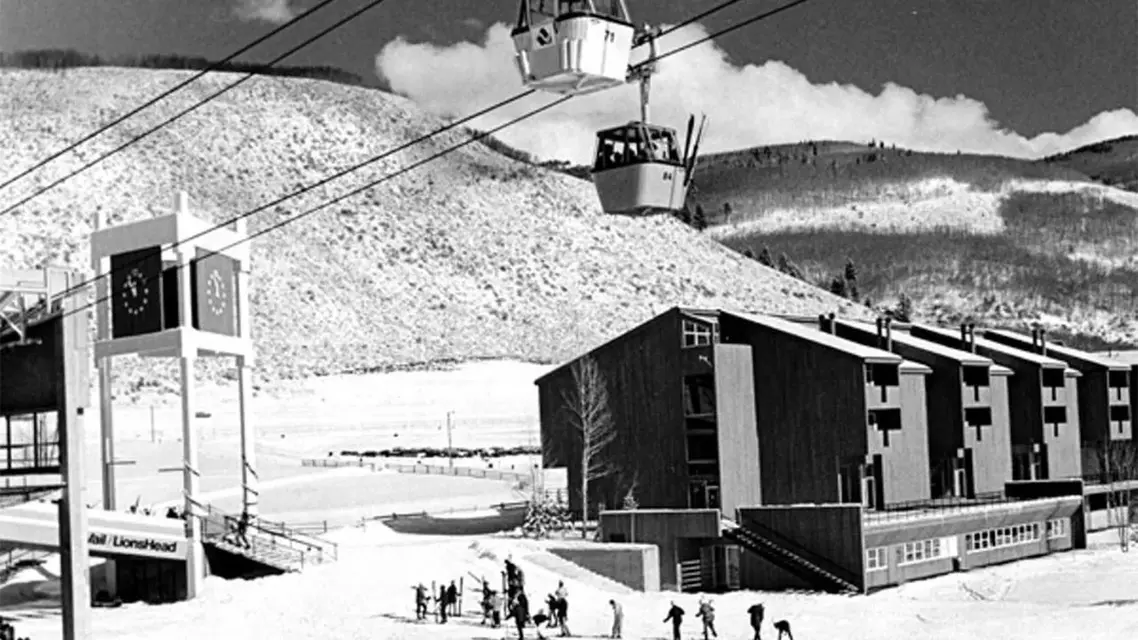
Vail Mountain was founded in 1962 by Pete Seibert and Earl Eaton, and opened for skiing on December 15, 1962. The company that runs it today is younger: Vail Resorts, Inc. went public on the New York Stock Exchange on February 7, 1997 and describes itself as a holding company organized in 1997. Which date counts as "founded" depends on whether you mean the ski area, the original business or today's public company, so the table below separates them.
Founding dates for the mountain, the business and the public company
| Date | What happened | Source |
|---|---|---|
| March 1957 | Earl Eaton takes Pete Seibert up the mountain; Seibert decides the terrain suits a ski area (Vail Daily dates it March 19) | Colorado Snowsports Museum; Vail Daily |
| 1958 | The founders buy more than 500 acres of Hanson Ranch, the land that became Vail Village, at $110 an acre | Colorado Snowsports Museum |
| December 1959 | The Vail Corporation is formed with 26 shareholders | Colorado Snowsports Museum |
| December 15, 1962 | Vail Mountain opens at 9 a.m. with one gondola, two chairlifts and $5 lift tickets | Colorado Snowsports Museum; Vail Resorts |
| Fall 1966 | The Town of Vail is incorporated | Town of Vail |
| January 3, 1997 | The company acquires Breckenridge, Keystone and Arapahoe Basin | Vail Resorts annual report, 1998 |
| February 7, 1997 | Initial public offering; the company's timeline says the stock opened at $23.50 | Annual report, 1998; Vail Resorts |
For the opening day itself, see when Vail opened in 1962. For the mountain's age in years, see how old Vail ski resort is.
Who founded Vail
Two World War II veterans started the mountain: Pete Seibert of the Army's 10th Mountain Division and Earl Eaton, an Army engineer. Vail Daily calls Seibert the "founder" and Eaton the "finder". Seibert grew up in New England and was badly wounded in the Apennine Mountains of Italy, spending 17 months in Army hospitals and earning a Purple Heart and a Bronze Star. He later worked on the ski patrol in Aspen, managed the Loveland ski area and attended a hotel school in Switzerland, all with a ski area of his own in mind.
Eaton grew up in the Eagle River Valley, near Edwards, and worked as a uranium prospector in summer, which gave him a deep knowledge of the back country. He served in the Army in World War II but not in the 10th Mountain Division, and in the early 1940s he helped build Camp Hale. In March 1957 he led Seibert on the seven-hour climb to the top of what became Vail Mountain.
They were not the only founders. Six men formed the original land-buying group, which used the cover name Transmontane Rod and Gun Club so that competitors would think it was after a hunting and fishing lodge: Eaton, Seibert, George Caulkins Jr., John Conway Jr., Bob Fowler and Jack Tweedy. All six were among the 26 shareholders of the Vail Corporation formed in December 1959. The club's name was later changed to Vail Associates, Ltd.
The 10th Mountain Division connection
The Army's 10th Mountain Division trained at Camp Hale, about 20 miles from the valley, during World War II. Seibert served in the division. The Town of Vail says he returned to the valley with fellow veterans Bill "Sarge" Brown and Bob Parker, and that the three shared a vision of a mountain ski community. The link is still visible on the mountain: Riva Ridge, the longest run at Vail and one of the trails open on opening day in 1962, is named for the February 1945 battle in Italy in which the division climbed Riva Ridge. The Colorado Snowsports Museum in Vail keeps a permanent 10th Mountain exhibit, "Climb to Glory". The Town of Vail notes that the gondola on opening day was among the first in the United States. How the town got its name is covered in how Vail got its name.
How the ski company became Vail Resorts, Inc.
The public company has a separate history from the mountain's. Its 1998 annual report was filed under the name Vail Resorts, Inc., formerly Gillett Holdings, Inc., and dates the company's fresh-start accounting to its emergence from bankruptcy on October 8, 1992. Vail Associates, Inc. was by then a wholly owned subsidiary that operated the ski areas. On January 3, 1997 the company bought Breckenridge, Keystone and Arapahoe Basin, and sold Arapahoe Basin on September 5, 1997 under a consent decree with the U.S. Department of Justice. The Breckenridge and Keystone purchase has its own guide.
Beaver Creek was not part of that purchase. It opened in 1980 and was already one of the company's resorts, so the four resorts at the 1997 stock offering were Vail, Beaver Creek, Breckenridge and Keystone. As of its fiscal 2025 annual report, the company operated 42 destination mountain resorts and regional ski areas; the later purchases are covered in what resorts Vail owns, how many mountains it owns and who owns Vail ski resort.